Freight warehousing and pallet storage across Spain and Europe
Sometimes the goods have to wait: a delivery slot that falls after the vehicle arrives, a groupage load waiting for its departure, a customs file completed late, or commercial stock that is not needed at the destination for another two months. Short or long, the transit storage is arranged as part of the road transport, so your pallets, and the responsibility for them, stay with one carrier from collection to delivery.
Why goods wait
When your freight needs storage
Three situations account for almost every wait, and each one is planned differently.
- The receiver is not ready. Distribution centres and factories work to booked unloading slots, retail sites and exhibition venues take deliveries on fixed dates, construction sites only once there is somewhere dry to put the material. A vehicle that arrives early either waits at the gate or comes back another day; holding the pallets nearby and delivering at the agreed hour costs less than either.
- The load is waiting for its departure. On LTL groupage routes freight collected from several senders is held at a consolidation depot until the vehicle in its direction leaves, changes vehicle once and continues. The wait is built into the service and usually measured in hours.
- The customs file is not closed. A shipment leaving the EU customs territory moves once its declarations are complete, so a certificate of origin or a licence that arrives late means the pallets wait until it does. The Customs Clearance page explains what holds a file up; this page explains where the goods are in the meantime.See Customs Clearance
- The goods are not needed yet. Seasonal stock, a project delivered in phases, a plant closed for the holidays: the goods are collected when the sender wants them gone and held until the receiver wants them in, for weeks or months.
Three places to wait
Where the wait sits in the journey
Wherever the pallets stand, the journey is one movement with one carrier. Choose a wait to see where it falls and how long it usually lasts.
Changes vehicle once and continues.
One transport contract, one carrier, carrier liability throughout
The cost of vehicle time
When the receiver cannot unload on the day
Three things can happen, and what separates them is the cost of vehicle time.
- The vehicle waits at the site. The first 2 hours are free of charge, counted from the time agreed in the transport order, not from an earlier arrival; after a few hours the driver’s hours run out and the vehicle is due at its next collection, so an afternoon at a closed gate is paid for by the next journey. Every day the vehicle stands loaded is charged, and each day costs more than the one before.
- The vehicle comes back another day. On a domestic route that is a second delivery run. On an international route it usually costs more, because the vehicle rarely stays in the region and the second attempt waits for the next journey in that direction.
- The goods are unloaded nearby and delivered when the receiver is ready. The vehicle continues, the pallets are handled once in and once out, and the delivery becomes a short local run on the agreed date. For anything beyond a few hours, this is the cheapest of the three.
If the receiver’s date is uncertain when you ask for the quote, say so: the journey is planned around it and the wait is priced before the vehicle leaves, instead of being decided at the gate.
Agreed before collection
Storage planned as part of the transport
Storage is arranged only for freight we transport, as a stage of that transport. The goods are collected, held where the journey requires and delivered under one contract, so your pallets, the paperwork and the responsibility for both stay with one carrier from the first signature on the CMR to the last.
Agreeing the wait before collection matters for two reasons:
- Planning. The vehicle, the place where the goods will stand and the delivery run are sized together. A pallet that is going to wait four days is routed differently from one delivered on arrival, and the difference shows in the price.
- Your cover. Storage agreed as a stage of the transport stays inside the CMR transport contract, so the carrier’s liability and Goods in Transit cover run without a gap from collection to delivery, the days in storage included. Storage improvised at the destination, when delivery fails and the goods are unloaded for your account, is treated differently in law: the carriage is regarded as ended and the goods are held on your behalf, on other terms.
When we know before collection that the receiver cannot take the goods on arrival, the shipment stays on the first footing throughout.
Counted, closed, reported
What happens to your goods while they wait
- Counted on arrival. The pallets are checked against the CMR and the packing list, the packaging is inspected, and any difference between the documents and what has arrived is recorded on the spot and reported to you the same day, with photographs where the packaging is affected.
- Stored as loaded. Closed and labelled, on the pallet they came in on. Nothing is opened, repacked or split unless that has been agreed for the delivery.
- Handled twice. One movement in and one movement out, by forklift or pallet truck, and nothing in between.
- You are told at both ends. When the goods have been received and again when they leave for delivery, from the team that has the shipment on file.
- Special conditions kept. A temperature range, an ADR classification or restricted access is held through the wait under the same conditions as on the vehicle, confirmed before booking; the Specialised Freight page explains what applies to each.
A temperature range or an ADR class? See Specialised Freight
One forklift movement
Cross-docking and consolidation on groupage routes
A cross-docking consolidation depot is where an LTL groupage load changes vehicle. Euro and industrial pallets collected from several senders arrive on the collection vehicles, are sorted on the dock by destination and are loaded onto the departure for their route, without going into storage in between. The pallets stay closed and the labels do the sorting, so the transfer adds one forklift movement and little else to the journey. A pallet that reaches the depot before its outbound vehicle waits on the dock for it, usually within the same day and occasionally overnight.
Your pallet arrives at the depot already checked at your dock and entered on the transport documents, which is what keeps the transfer quick and the count reliable. The Groupage (LTL) page explains how shared space is measured and priced; the transfer described here is the step it refers to when a shipment changes vehicle once on its way.
On a groupage route? See Groupage (LTL)
Handling, then space
How storage is priced
Storage is priced with the transport, in three elements:
- Handling in: the pallets off the vehicle and into the warehouse.
- Handling out: the pallets onto the delivery vehicle.
- Space: what the pallets occupy, per day or per month.
Every day of waiting has its cost: handling in and out is paid once, and each day the pallets stay adds the space they take, so the total grows day by day. A shipment delivered on arrival carries no storage element at all. Over weeks or months, space becomes the main cost and is quoted per pallet per month.
Each element is listed separately, so the cost of the wait can be read on its own. If the receiver’s date moves while the goods are in storage, the extra days are agreed with you before they are charged; as long as the goods, the addresses and the dates stay as described, the price agreed is the price you pay.
Hours, days or months
From the dock and back again
Choose how long the pallets wait to see where they go, how often they are moved and what the wait adds to the price.
The questions we ask
What we go through on the call
A conversation of a few minutes covers what the quote needs:
- where the goods are collected and when they are ready
- where they are delivered, and whether the receiver can take them on arrival or only from a later date
- what the goods are: pallets or pieces, size, weight, whether they stack
- anything they bring with them: a temperature range, an ADR classification, a value worth declaring
- how you want them delivered at the end: in one go or in stages
Anything you do not know yet is planned as an open point, not a blocker.
Where the goods can wait
Warehousing across Spain and Europe
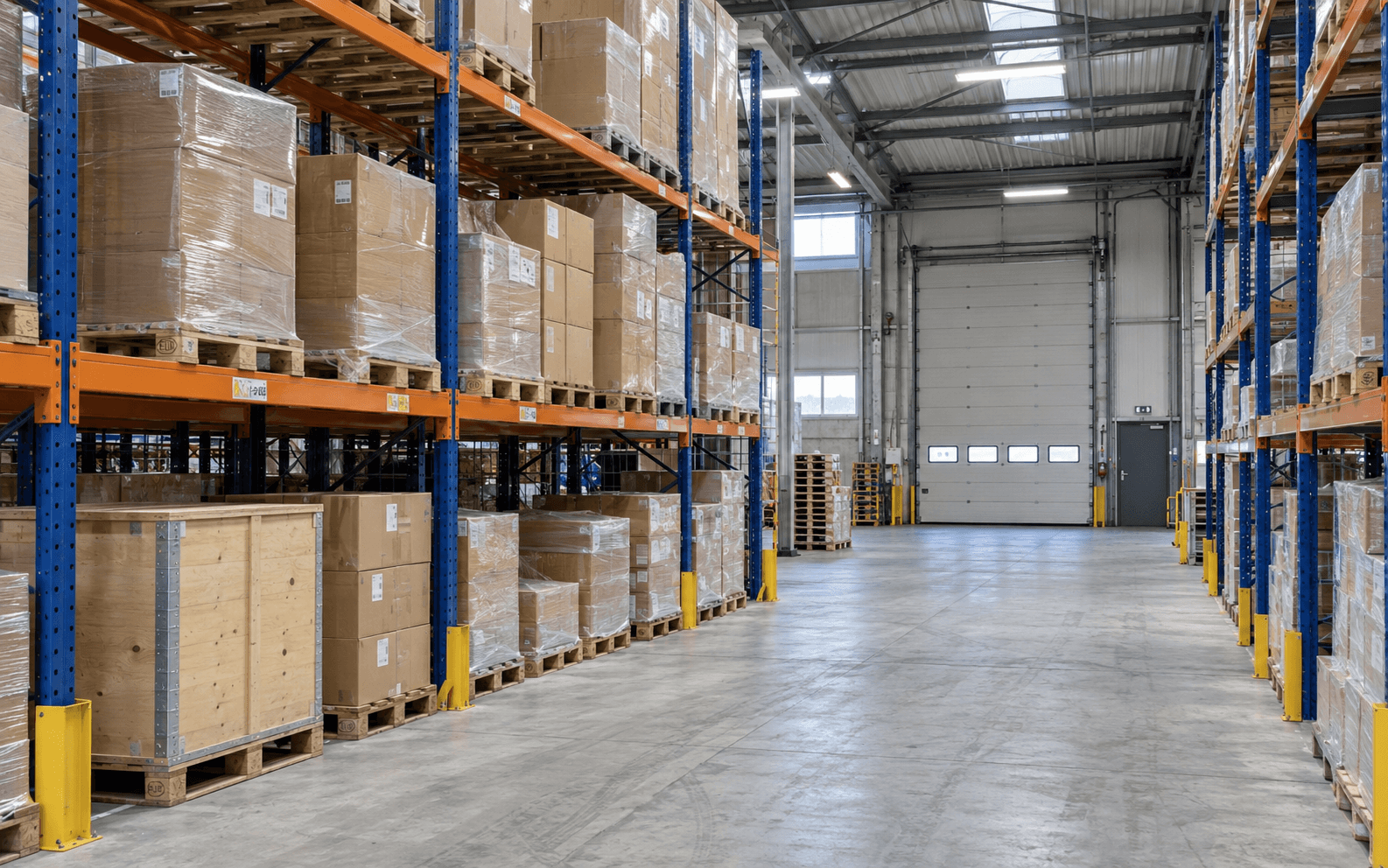
Freight storage is arranged on the routes we transport, at partner logistics warehouses and consolidation depots across Spain, the European Union, the United Kingdom, Switzerland and Norway: at the depot on groupage routes, near the destination on dedicated journeys, and wherever the goods are best held for a longer stay. Where the goods would wait, for how long and under what conditions is confirmed before the booking, together with the transport plan.
A vehicle of its own? See Dedicated Transport & FTL
FAQ
Frequently asked questions about warehousing
Start your request
Goods that have to wait?
The two addresses, what the goods are and the two dates, when they are ready and when the receiver can take them, are enough. The wait is priced before collection.