Automotive road transport across Spain and Europe that moves with your production
In automotive supply chains, a delivery is judged by a single figure: the hour the parts reach the assembly plant. ENVO works to that figure on every road freight movement, from one urgent box for a stopped production line to the weekly full truckload (FTL) trailer of OEM and Tier 1 series components, in Spain and across Europe.
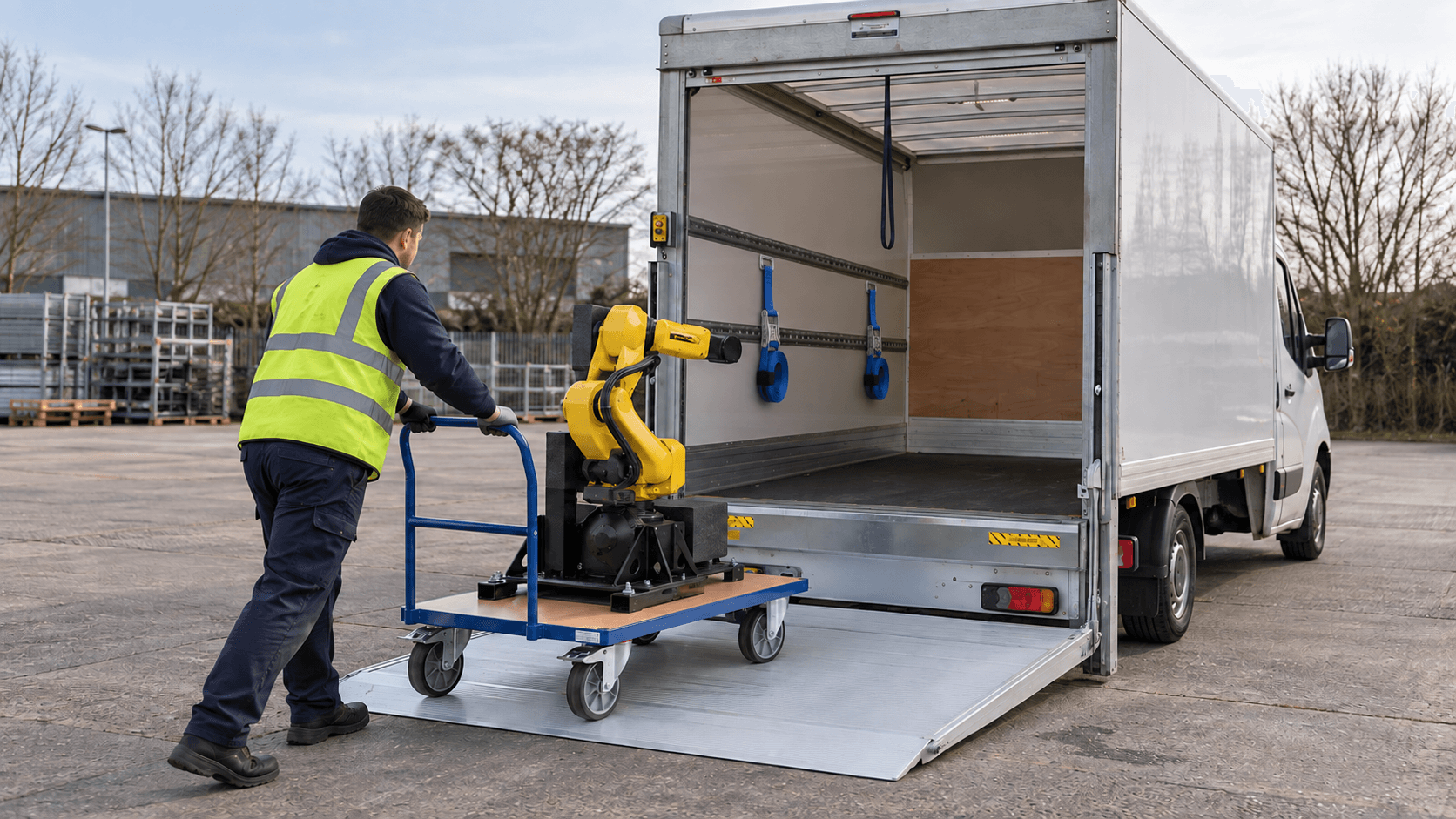
Urgent, scheduled, aftermarket
Three kinds of automotive movement
Most of what we move for this sector falls into three situations, and each one is planned differently.
A line waiting for one part
The call comes when a station is short of something, and from that moment the plan runs backwards from the latest hour the part can be at the gate. A compact express van under 2.5 tonnes can be on its way within the hour and, being outside the EU tachograph rules that apply above that weight in international road transport, covers a long distance with fewer enforced stops. For a heavier load, a second driver keeps the vehicle moving while the first rests. Which of the two is right depends almost entirely on distance.
Series components on a schedule
A supplier sending the same components to the same plant every week needs a departure it can count on. These movements run on fixed days, on a vehicle sized to the weekly quantity and timed to arrive inside the window the plant has booked. Your pallets leave the dock counted, with the order reference the plant expects on the documents, so the vehicle goes from the gate straight to the bay.
Aftermarket and spare parts
Automotive aftermarket and spare parts for distributors, dealers and workshops travel on shared LTL groupage capacity within a delivery window, which keeps the cost in proportion to a single Euro pallet. Where a workshop is waiting for a specific part, the same shipment moves to a dedicated vehicle, and the difference is shown in the quote.
One driver or two
How soon the parts can be there
Choose a distance to compare one driver with a two-driver crew, hour by hour.
How a plant receives
Just in time and just in sequence: delivering at the plant gate
A plant does not receive goods the way a warehouse does. Deliveries are booked into windows tied to the production schedule, the vehicle is registered at the gate before it reaches the bay, and a vehicle that misses its window waits for the next one.
Two terms describe how tight that window is. Just in time (JIT) governs when parts arrive, in the quantities the production line will consume. Just in sequence (JIS) governs the order in which they come off the vehicle, so a supplier working to sequence is measured on the order of the pallets as well as the hour. Your pallets stay in the order they were loaded and are delivered to inbound reception in that order; the sequencing itself stays with you, as the supplier.
From a box to a trailer
The vehicles behind it
A bracket and a body panel travel in the same supply chain, so the range runs from a compact van to a full trailer.
| Load | Vehicle | Why |
|---|---|---|
| One box, a small assembly, a tool | Compact van, up to 2 pallets | Outside the international driving-time rules |
| A pallet of small parts, urgent | 3.5 t van, up to 5 pallets | Leaves when the pallet is ready, not on a timetable |
| Series components, mid volume | 7.5 t truck, up to 14 pallets | Plants and supplier yards with a tight approach |
| A full trailer of components | 13.6 m trailer, up to 33 pallets | Scheduled supplier-to-plant runs |
Light parts fill the deck before the weight limit; castings and batteries reach the payload first. The Our Vehicles page carries the full specifications.
Before you compare quotes
Who carries the cost when a delivery is late: what the CMR says
Every carrier sells the prevention of a stoppage. Few say what happens if one occurs anyway, and it is worth knowing before you compare quotes, ours included.
International road transport runs under the CMR Convention, and under it a carrier that delivers late owes compensation up to the price of the transport, whatever the line behind it was worth. That is the position of every carrier, and no on-time record changes it. Where more is at stake, a higher limit can be written into the CMR against an agreed surcharge, settled before the goods move. If you know what an hour of stoppage costs you, both options come with the quote, each with its price.
Cleared before the port
Automotive parts across a customs border: Spain to the UK and back
A part travelling from Spain to a plant in the United Kingdom is cleared on both sides of the Channel, and a stopped line does not wait for paperwork. The export, import and T1 transit declarations are prepared together with the transport, so they are closed before the vehicle reaches the port and the goods do not stop there. Two details are worth settling early, because they follow every shipment afterwards: the HS / TARIC commodity code of the part and the country of origin it was made in, which between them decide the customs duty.
Parts for a plant in the UK? See Customs Clearance
Where our part ends
What is included, and what is not
- Included: the journey from your dock to the plant’s inbound reception, with the load handed over in the order it was built and with the references the plant requires on the documents.
- Not included: sequencing inside the plant and the movement of parts to the line, which stay with you or with the plant’s own provider.
- Returnable packaging: racks and KLT boxes travel as freight when they are booked as freight; there is no packaging pool or empties programme behind them.
- Beyond a standard trailer: we do not carry abnormal loads, so presses, jigs and other loads that need permits, escorts or specialist equipment are outside what we quote.
Addresses, parts, the hour
What a quote for an automotive movement starts from
Three things: the two addresses, what the parts are and the hour they have to be at the plant. You get back the vehicle, the route, the arrival hour and the price. Anything the plant wants on the documents, a call-off reference, a gate booking, is added when the transport is booked, and for a route outside the EU the customs details come in at the same time.
FAQ
Frequently asked questions about automotive transport
Start your request
Let’s plan your next automotive shipment
The collection and delivery points, what the parts are and the latest hour they can arrive. You get back the vehicle, the route, the arrival hour and the price, confirmed before anything is booked.